Dynamic Resource Scheduler
Whats New!
User Experience Changes
Security and Authentication
Modules and Utilities
Cyclical Scheduling - Configuration Interface
Cyclical Scheduling - Now Bulk Scheduling
Resource Quotas Improvements - Percentages
Architecture and Scheduling
Configuration
User Guides and Help
Get to Know Dynamic Resource Scheduler
How Does Dynamic Resource Scheduling Work
Speaking the Language of Scheduling
Navigating Dynamic Resource Scheduler
How your Data Links Together
Managing your Organisation
Viewing your Data
Your Customer Data
Your Service Orders
Your Jobs
Your Workers and Resources
Manage Your Tasks
Actioning your Jobs and Tasks
Job Templates
Find A Jobs Possible Workers
Locking Your Jobs
Create a Follow On Task
User Queues and Organising Your Tasks
Schedule and Organise
How to Optimise Your Scheduling
How to Schedule Manually
Scheduling Mutliple Jobs at Once
Reassign and Reschedule your Tasks
Managing Your Time and Durations
Managing your Comments and Contacts
Using Bookmarks to Drive Efficiency
Managing Your Job Status
Visualising Your Planning
Workers and Resources
Advanced Data Management
Creating Unavailability in your Workforce
Adding an Unavailability to an Individual Worker
Creating Unavailabilities for Multiple Days or Workers
Maps And Journey
Using Maps to Visualise Your Data
Using Maps With Your Data
Learn about our Closest Function
Your Journeys
Meetings and Non-Productive Planning
Administer Your Scheduler
Managing Your Organisations and Agencies
Managing Your Custom Data
Managing your Contracts
Customising Your Experience
Managing Depots and Starting Locations
Managing Diary Bookmarks
Managing your External Chart Views
KPI Settings
Managing Your Priorities
Learn about Sectors
Managing Your Follow On Templates
Get To Know Your Working Time Calendar
Managing your SOR Templates
Managing your Job Templates
Managing Your Vocabulary
Managing Your Bookmarks
Manage Your Customer Templates
Get to Know Import and Export
Managing Your Tenant Code Rules
Managing your Order Templates
Managing Your Unavailability Reasons
Get To Know Your Working Time Calendars
Managing your Worker Templates
Releases and Readiness
DRS 6, DRS 5.7 and Job Manager
User Guides and Help
Get to Know DRS
Dynamic Scheduling - How does it work
Navigating DRS
Vocabulary and Concepts
Customers
Orders
Jobs
Scheduling Jobs
Job Functions
Workers
Views
Object Inheritance
Agencies
DRS Modules
Scenario Based Planning
Managing your SMS Service
5.7 Documentation
Technical Documentation
Release Notes
DRS 6.1 Release Notes
DRS 6.1.22 - February 20, 2026
DRS 6.1.21 - September 10, 2025
DRS 6.1.20 - April 20th, 2025
DRS 6.1.19 - 11th April, 2025
DRS 6.1.18 - 13 February 2025
DRS 6.1.17 - 20th December 2024
DRS 6.1.16 - November 8th, 2024
DRS 6.1.15 - October 10th, 2024
DRS 6.1.14 - 6th September 2024
DRS 6.1.13 - 9th August 2024
DRS 6.1.12 Release Notes
DRS 6.1.11 Release Notes
DRS 6.1.10 Release Notes
DRS 6.1.9 Release Notes
DRS 6.1.8 Release Notes
DRS 6.1.7 Release Notes
DRS 6.1.6 Release Notes
DRS 6.1.5 Release Notes
DRS 6.1.4 Release Notes
DRS 6.1.3 Release Notes
DRS 6.1.2 Release Notes
DRS 6.1.1 Release Notes
DRS 6.1.0 Release Notes
DRS 6.0 Release Notes
DRS 6.0.0.0 Release Notes
DRS 6.0.0.1 Release Notes
DRS 6.0.0.2 Release Notes
DRS 6.0.0.3 Release Notes
DRS 6.0.0.4 Release Notes
DRS 6.0.0.6 Release Notes
DRS 6.0.1.0 Release Notes
DRS 6.0.1.1 Release Notes
DRS 6.0.1.2 Release Notes
DRS 6.0.1.3 Release Notes
DRS 6.0.1.4 Release Notes
DRS 6.0.1.5 Release Notes
Kirona Housing
Job Manager 9
Job Manager 9.3.0 - October 2024
Job Manager 9.1.0 - December 2022
Job Manager 9.2.0 - November 2023
Release Notes Disclaimer
Administering your Field Service Products
Supported Versions Policies
Contents
Meetings (5.7)
The Meetings element within DRS has been redesigned to allow customers to use this as an ‘Unavailability with travel time’ feature. This means that workers can be assigned to attend a meeting at a desired location and the Meeting feature will allow this 'job' to be sent to the workers PDA, update to say that the meeting has been completed, and will also allow for travel time to be scheduled around the meeting time.
How To Configure Meetings
Enabling Meetings within DRS
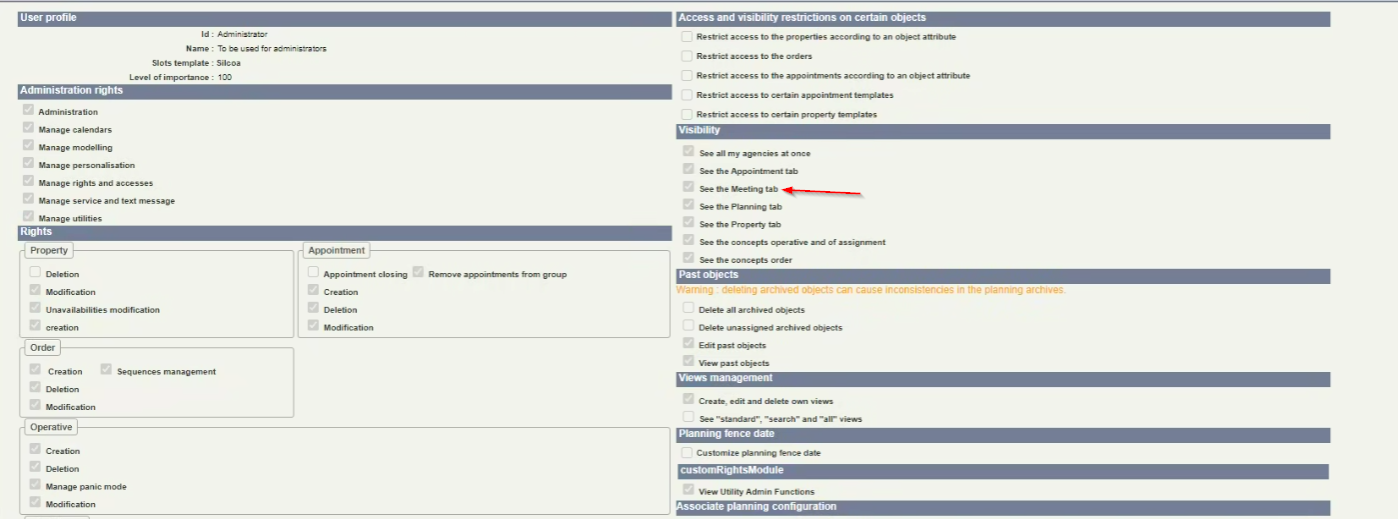
For all users who need access to configure Meetings, the following Profile Permission will need to be enabled. Without this permission, the meetings tab and below functionality will not be visible.
Configuring a Meeting Location
First, you need to configure a Customer location for a meeting to occur. To create a location for a meeting, you first must create a Customer Template which identifies the customer as a meeting location. This is accessed through the Configuration tab, in the Modelling section, under Customer Templates.
This is done by setting the value for 'Template for meeting' to YES.
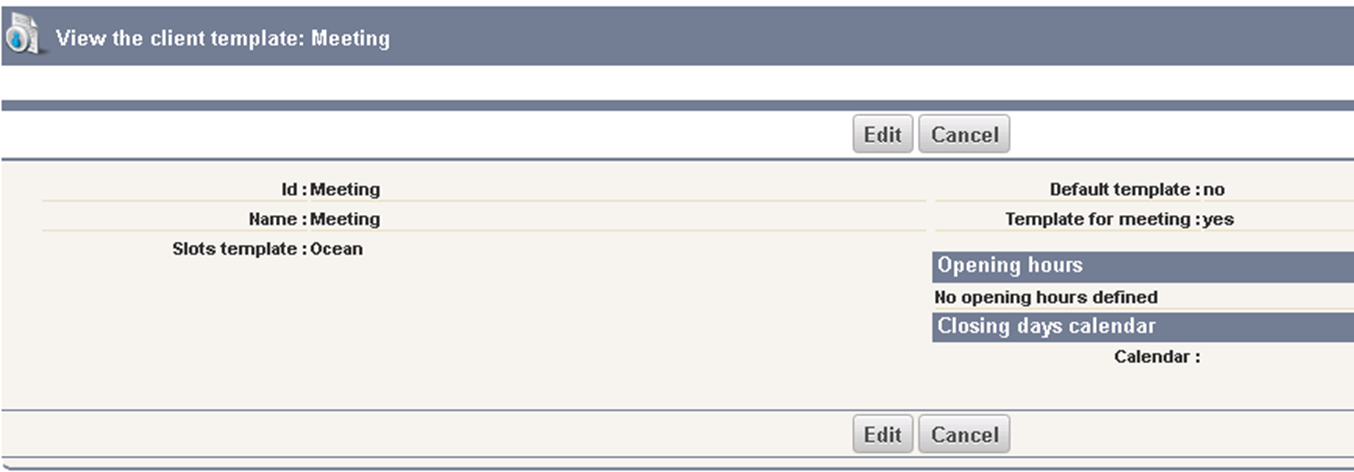
Once created, you can create your Meeting Location by creating a normal Customer Object and attaching the Meeting Template to it.
Configuring a Meeting Job Template
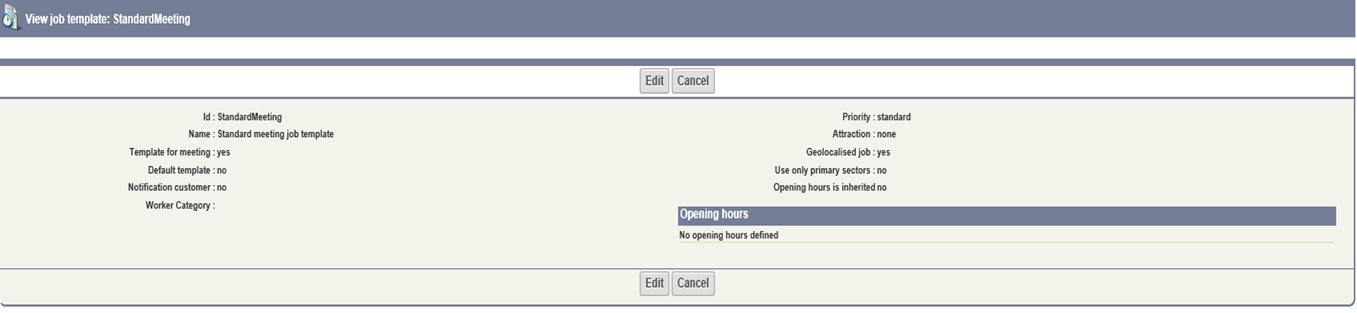
Next, you need to configure your Meeting Job Template. This is accessed through the Configuration tab, in the Modelling section, under Job Templates.
By default a Standard Meeting Job template is available in DRS. You can create your own Meeting job Template template as well, should you need this. Within the Meeting Job Template, you can configure default object attributes specifically for your Meeting template.
By allowing the template to be Geolocalised, it is possible for travel time to be calculated before and after the meeting.
Configuring a Meeting Service Order and Job Template
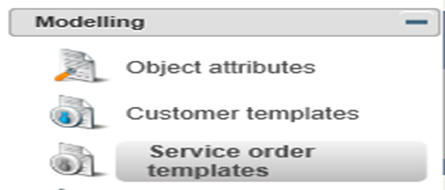
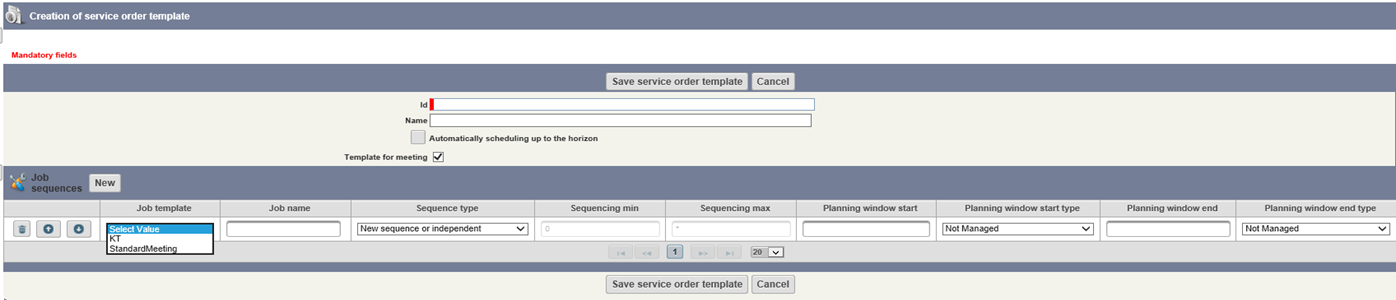
Next, configure a Service Order Template to create the Order object for your Meeting. This is accessed through the Configuration tab, in the Modelling section, under Service Order Templates.
Select the 'Template for Meeting' tickbox which will limit the Job templates displayed when a row is added to the Job Sequence section, only Meeting templates will be displayed in the dropdown list.
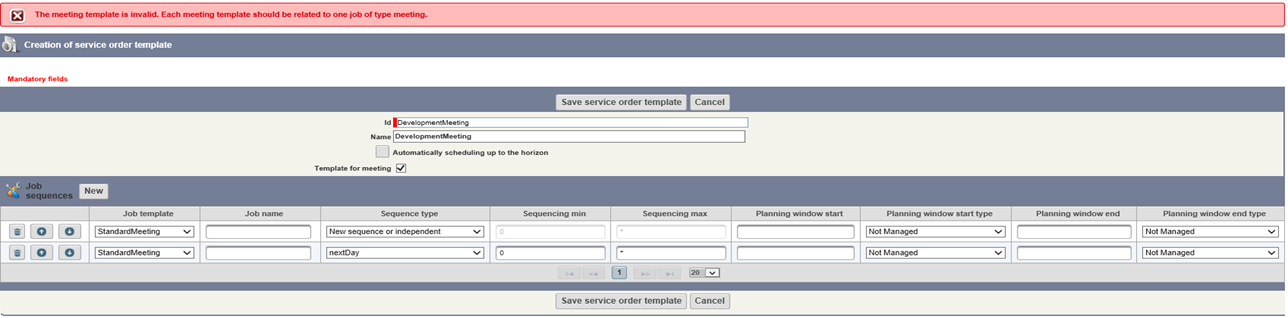
It is only possible to have one Job Template allocated to a Meeting Order Template, if more than one row is added to the Job Sequences section the following error will be displayed when the template is saved.
Once the Service Order Meeting Template has been created it is possible to create meetings via the Meetings tab in DRS using the 'New’ button. This will display the business data added by default or by design, the selected customer and it will default to schedule on today's date.
Creating a Meeting for your Workers
Meetings are created for scheduling from the Meetings tab within the DRS UI. This tab's visibility is controlled by profile permissions and may need to be enabled by your system administrator before it is available to you.
To successfully create Meetings that can schedule and be requested through the API by your Mobile system, you will need to ensure that all basic and mandatory data is completed on the Job and Order object. Mandatory items are marked with a red bar to the left of the data entry option.
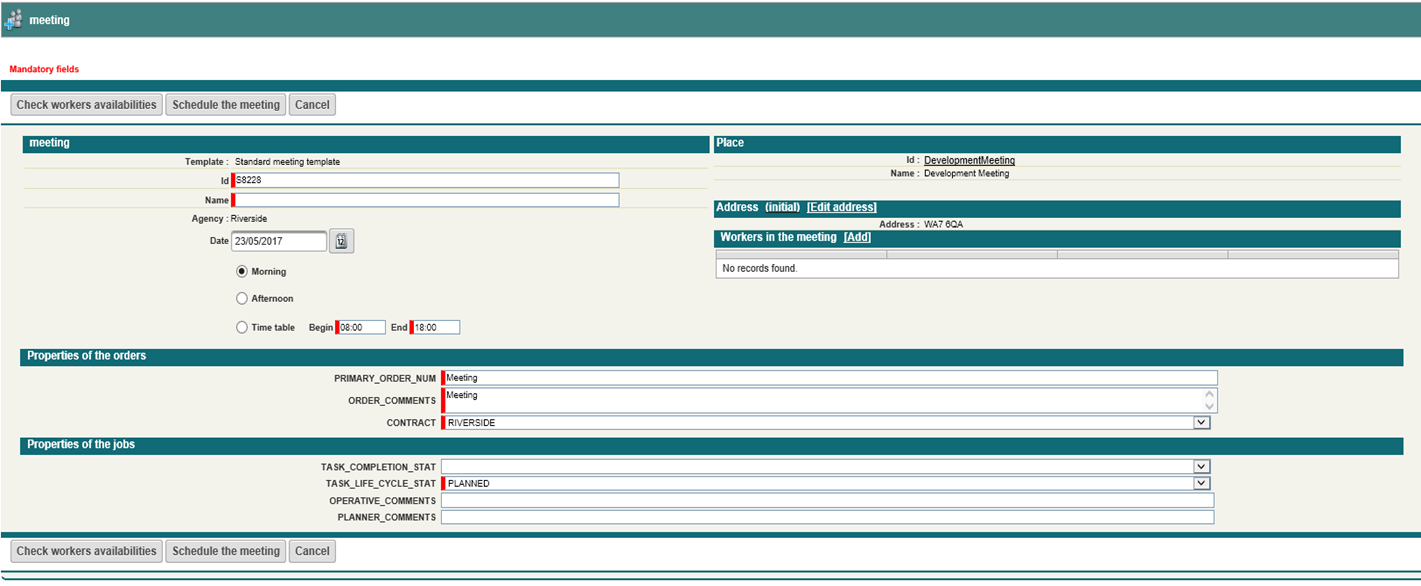
By selecting 'Add' next to the 'Workers in the meeting' section, a screen will display all workers that can be invited to attend the meeting.
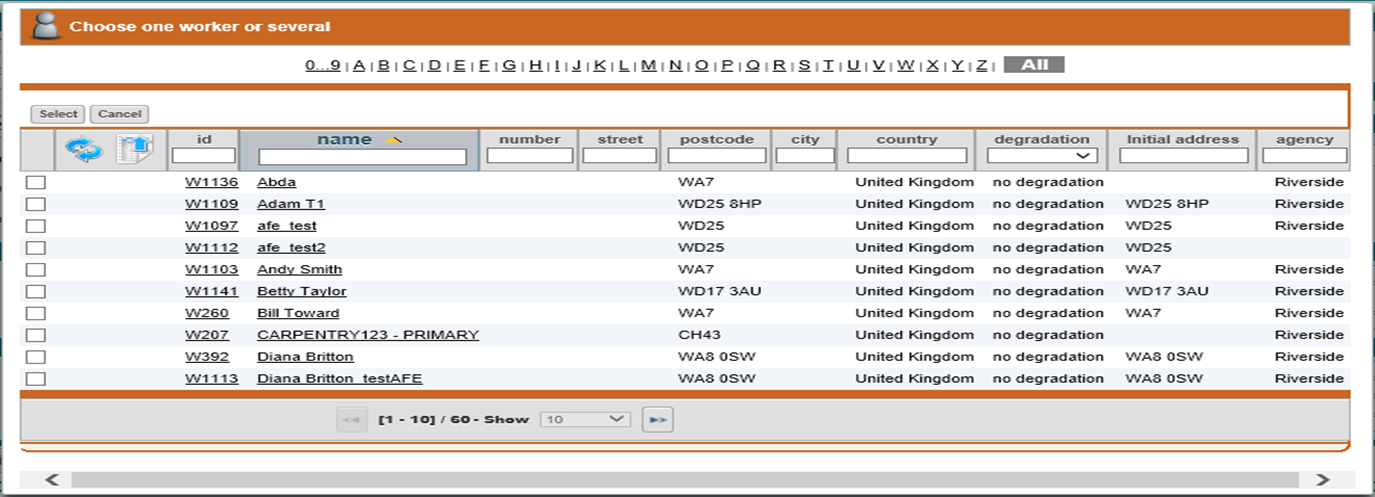
It is possible to select multiple workers and these will be added to the Meeting. The question mark icon will display until 'Check Workers Availability' is selected and then this will be updated to display as a tick or cross depending on whether they are available to attend.

The 'Forced' option allows for the Meeting to be forced onto the workers diaries in cases where attendance is mandatory. The bin icon allows for workers to be removed from the meeting if required.
If workers are unable to attend the meeting, a reason will be provided so that the user can determine whether this is a conflict with a job on the diary or if this is due to a configuration issue such as a Working Hours Calendar.
Schedule the Meeting
Once you have set all the required information and selected your workers, click the button at the top of the screen marked 'Schedule the Meeting'. This will attempt to schedule the meeting based on your selected settings. If you have selected to Force the meeting, this will override any scheduling conflicts created by the meeting.
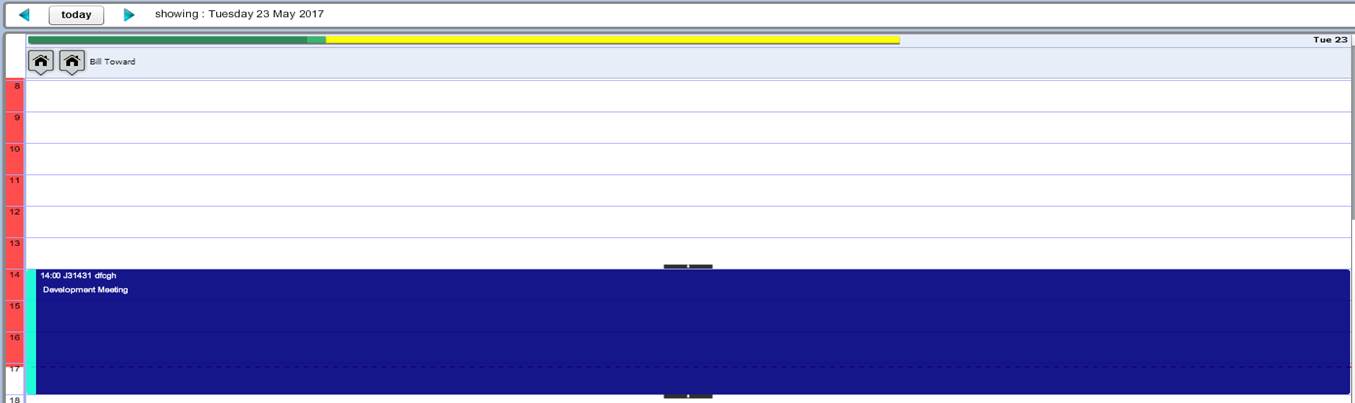
Once the meeting has been successfully scheduled it will appear on the workers diary in dark blue. This is setup by default on the Standard configuration. If you have configured a different diary template, your experience may vary.
Sending the Meeting to Mobile Workers
When scheduled, a Meeting will output an Appointment Confirmation update, via Web Services or Flat File, to your Back Office system. The format of the Appointment Confirmation will match the format provided for standard Job Appointments.
Meetings will be despatched through the standard getSchedule and getNextJob commands via Mobile Gateway and Web Service Gateway to your mobile device. The format of the meeting within the response will be the same as a standard Job. Your Mobile working solution can provide updates to the Meeting using the standard updateBooking requests in the standard format. This allows for the workers to Complete the meeting and get their next job of the day sent.
The configuration of your Mobile and Back Office solutions will need to be compliant with the Meetings functionality to fully support your Mobile Workers. Communications from DRS are designed to replicate the standard Job workflow as closely as possible to minimise the impact on the standard process.
Advice can be given by OneAdvanced Consultancy and Product teams, however with the exception of Job Manager customers, OneAdvanced cannot provide responsibility for ensuring your Mobile and Back Office solutions remain compliant.